

Anyone who has tried to change a habit, pursue a life goal, or shape a new mindset knows this: personal growth is rarely a straight line. Progress happens, but so do setbacks and detours. Why is the path so tangled? In our experience, this confusion often comes from treating life’s pieces—thoughts, feelings, actions—as isolated, instead of part of a wider whole. That’s where systems thinking brings clarity.
What does systems thinking mean for personal development?
When we look at systems thinking in our own personal journey, we see it as a way to understand how every aspect of our mind, behavior, emotions, and environment interact. Instead of picking apart life into tiny problems and fixing them one by one, systems thinking encourages us to see connections and patterns between those problems. This leads to a clearer, more meaningful change.
Imagine your daily mood, your deepest beliefs, your work performance, your health, your family dynamics—they are not separate tracks, but interlinked. One influences the other, in visible and invisible ways. The whole is greater than the sum of its parts.

Why traditional approaches often fall short
We have seen how many personal development programs focus only on isolated goals. For example, some suggest changing morning routines, others focus on single habits, or positive thinking. While such efforts can have value, they tend to miss how one area affects—and is affected by—another.
One change often triggers a chain reaction.
In studies where systems thinking was measured through reliable tools like the Systems Thinking Scale (PubMed), researchers found that people with higher systems thinking skills were better able to adapt their behaviors and see links between their choices and long-term outcomes. So, if we change a single habit but ignore its environment, or the emotional needs it is attached to, we may be destined to see that change snap back.
The building blocks of systems thinking in growth
From our perspective, systems thinking starts with four key questions:
- What is the pattern here?
- What parts are connected and how?
- How do my thoughts, feelings, and actions shape each other?
- Where do unintended results show up?
These questions help us step back and take a wider view before making fast decisions about ourselves or our path.
Mapping your own system: a practical start
It can feel overwhelming to step back and see your life as a big network. We encourage a gentle, step-by-step shift. Here’s how we recommend applying systems thinking in personal development:
- Notice recurring patterns. Instead of focusing on today’s problem, watch for themes that show up over time. For instance, do you always struggle to set boundaries when stressed? Do your energy slumps follow a weekly rhythm?
- List out the parts involved. This means not just your behaviors, but your physical environment, the people around you, your beliefs, and the events leading up to challenges or wins.
- Draw the links. Visualize or write how one aspect leads to another. Perhaps lack of sleep leads to irritability, which then leads to arguments, which then affects your work focus, and so on.
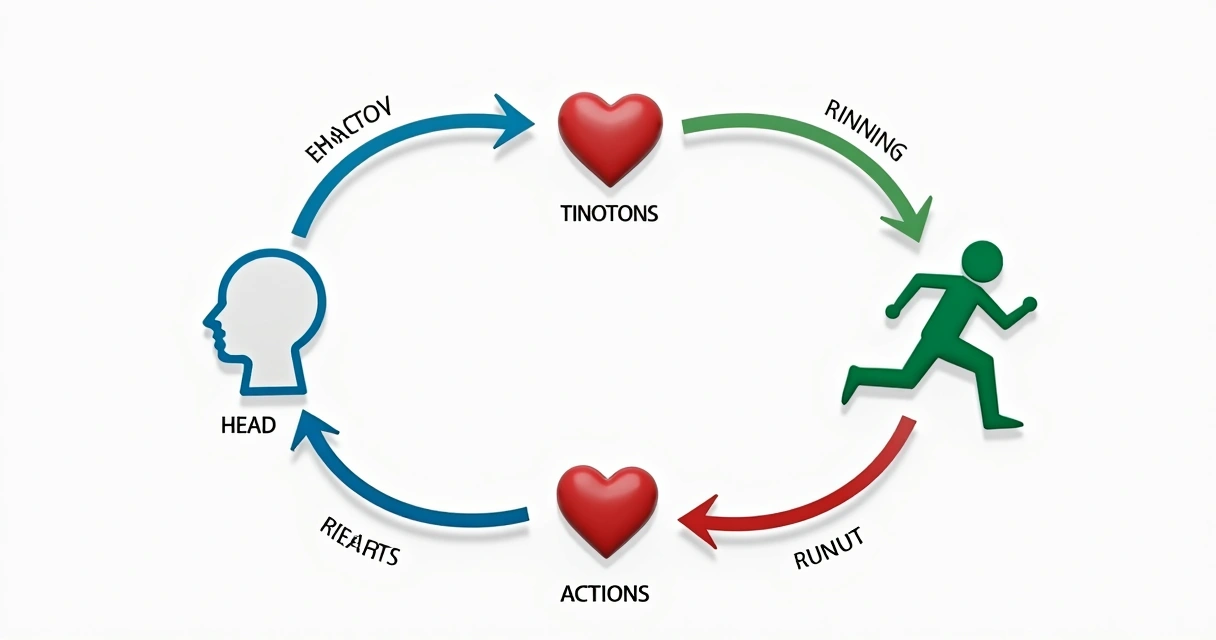
- Look for feedback loops. These are repeating cycles. For example, negative self-talk can lead to poor outcomes, which then makes the self-talk even worse. Mapping these loops can shed light on why some habits are hard to break.
- Test new changes in context. Instead of swapping one habit, try adjusting a few related pieces at once. Change your bedtime, your morning routine, and how you handle stress—not just one.
Studies from the University of Cincinnati show that using a systems perspective in organizations can improve satisfaction and outcomes. The same principle applies to personal growth: seeing the whole makes each change more likely to last.
How systems thinking changes what progress looks like
When we view our growth as a system, we stop asking, “Why didn’t this one thing work?” and start asking deeper questions. Maybe our sleep isn’t improving despite new habits because work stress triggers late-night worry, which feeds back into sleep issues. Perhaps a lack of confidence at work has roots in earlier experiences, family dynamics, and learned beliefs—not just in daily choices.
We see this again in research on systems thinking that includes reliable scales for both adults and adolescents (PubMed). People who score higher in systems thinking are more likely to spot hidden influences and choose long-lasting solutions.
Developing systems thinking: is it trainable?
We are often asked whether someone “just has” a systems-focused mind, or if it can be learned. New findings answer this with hope. Recent research in Frontiers in Education found that personality and training matter more than years of experience alone. Even those early in their professions—and by extension, in their personal discovery—can build strong systems thinking with support and practice. Personality traits like curiosity, reflection, and openness help, but targeted exercises can make the biggest difference.
How to build a systems mindset in everyday change
Based on what we have experienced ourselves, and from available research, the following steps help in growing these skills:
- Journal with a network view: Write about problems and reflect on which other parts of your life they touch. Draw a simple web. Patterns will start to emerge.
- Use “why” and “how” questions, not just “what.” Before making a decision, ask how your change could impact other parts of your life. What could be the ripple effects?
- Discuss changes with people affected. Family and friends can offer new angles and may reveal blind spots.
- Review both the short and long feedback loops. Are you seeing immediate, medium, or long-term shifts from your choices?
- Stay open to adjusting as you go. The system is always in motion; that’s its nature.
The shift from isolated growth to integrated transformation
Seeing your development path as a living system is not about making life more complicated. In our view, it is about finding clarity and peace in the face of complexity. This doesn’t mean trying to control every aspect, but learning to see more, choose better, and adapt faster.
Complex does not mean confusing.
With time, patterns reveal themselves, and we gain agency. We better understand both our setbacks and our breakthroughs. Progress becomes measurable, sustainable, and unique to our own journey.
Conclusion: clarity through a systems lens
Systems thinking clarifies the personal development path by illuminating the connections that matter most. It shifts the focus from isolated struggles to dynamic growth, where every part and every pattern belong. With practice, intention, and curiosity, we build not just new habits, but a fuller and more integrated life.
Frequently asked questions
What is systems thinking in personal development?
Systems thinking in personal development is a way of looking at personal growth that connects thoughts, emotions, actions, and environments as parts of a living system. Instead of seeing problems as stand-alone, it focuses on how different areas of life influence one another, leading to more lasting and meaningful change.
How can systems thinking help growth?
Systems thinking helps growth by revealing patterns, hidden influences, and feedback loops that drive our choices and behaviors. By seeing the bigger picture, we can spot root causes, prevent future setbacks, and create changes that have wider and longer-lasting impacts.
Is systems thinking hard to learn?
While systems thinking may feel new at first, research shows it is a skill that can be learned and strengthened over time. Personality traits like curiosity and the use of specific exercises, such as mapping patterns and connections, can accelerate learning. Even those with little prior experience can become skilled with focused practice.
What are the main benefits of systems thinking?
The main benefits of systems thinking include improved decision-making, greater self-awareness, the ability to find lasting solutions, and the reduction of recurring problems. People applying a systems approach find that they can adapt faster and see unexpected opportunities for growth.
Where can I learn systems thinking skills?
Systems thinking can be learned through books, workshops, journaling, guided reflections, and specialized scales such as those developed and validated in research. Many universities and training programs offer resources, and self-study through real-life observation and feedback loops can help bring these concepts to life.